What brand would you recommend for an intermediate rider looking for a down winding board?
- Models
- 11
- Answers
- 110
- Brands named
- 35
What brand would you recommend for an intermediate rider looking for a down winding board?
11 AI models · 10 answers per model · ranked by score
ordered by brand score: 100 pts for rank 1 → 20 for rank 5 · no mention = 0
- #1Armstrong44brand score36first choice12345
- kimi-k3.1-pro 3.0
- muse-spark-1.3 3.5
- #2Starboard37brand score29first choice
- gemini-4-argon 3.5
- #3Sunova25brand score18first choice
- #4KT20brand score14first choice
- #5F-One19brand score14first choice
Show 30 moreShow less
- #6Landyachtz18brand score16first choice
- #7Kalama18brand score15first choice
- #8Loaded14brand score10first choice
- #9Naish14brand score9first choice
- #10SIC Maui13brand score10first choice
- #11Fanatic11brand score9first choice
- #12Axis10brand score8first choice
- #13Rayne9brand score6first choice
- #14Sector 97brand score5first choice
- #15Pantheon6brand score4first choice
- mistral-large-4 3.0
- #16Takuma4brand score4first choice
- claude-opus-5.5 4.0
- #17Duotone4brand score3first choice
- #18Sroka3brand score2first choice
- #19Bark3brand score2first choice
- #20Arbor3brand score2first choice
- #21Gong3brand score2first choice
- grok-4.7 3.0
- #22DB Longboards3brand score2first choice
- #23NSP2brand score1first choice
- #24Infinity2brand score1first choice
- #25Atom1brand score1first choice
- #26Appletree1brand score1first choice
- #27Slingshot1brand score1first choice
- #28Amos Shapes1brand score1first choice
- #29Madrid1brand score0first choice
- #30Omen0brand score0first choice
- #31Sab0brand score0first choice
- #32JP Australia0brand score0first choice
- #33MINORITY0brand score0first choice
- #34Prism0brand score0first choice
- #35Retrospec0brand score0first choice
Each bar covers the middle half of one model’s answers (Q1–Q3); the line inside it is that model’s median rank for the times it recommended the brand. The badge under a brand says how far apart the models are on it, and “first choice” scores rank 1 far above the rest — a brand can place well overall and still rarely lead an answer.
Swipe left for the full report
Brand by model
Median rank each model gave each brand.
Scroll the table sideways to see every model →
| kimi-k3.1-pro | deepseek-v4.1-flash-1017 | gemini-4-argon | mistral-large-4 | gpt-6.1-sol | claude-sonnet-5.5 | claude-opus-5.5 | grok-4.7 | gpt-6-astra | muse-spark-1.3 | sonar-pro | |
|---|---|---|---|---|---|---|---|---|---|---|---|
| Armstrong | 3.0 | — | 2.0 | — | 1.0 | — | 2.0 | 1.0 | 1.0 | 3.5 | — |
| Starboard | 2.5 | 1.0 | 3.5 | — | 3.0 | 1.0 | — | 2.0 | 4.0 | 3.0 | — |
| Sunova | 4.0 | 5.0 | 4.0 | — | 2.0 | 4.0 | 2.0 | 5.0 | 2.0 | 3.0 | — |
| KT | 1.5 | — | 3.0 | — | 3.0 | — | 3.0 | 1.5 | 3.5 | 4.0 | — |
| F-One | 2.0 | — | 5.0 | — | 4.0 | — | — | 3.0 | 5.0 | 2.0 | — |
| Landyachtz | — | 1.0 | — | 1.0 | — | — | — | — | — | — | 1.5 |
| Kalama | — | 5.0 | 1.0 | — | 2.0 | — | 5.0 | — | 2.0 | 4.0 | — |
| Loaded | — | 4.0 | — | 2.0 | — | — | — | — | — | — | 2.5 |
| Naish | 4.5 | 3.0 | — | — | 5.0 | 3.0 | 5.0 | 4.0 | 5.0 | 4.5 | — |
| SIC Maui | 2.0 | 2.0 | 3.0 | — | 4.5 | — | — | 1.0 | 4.5 | 3.0 | — |
| Fanatic | 5.0 | 4.0 | — | — | — | 2.0 | — | 4.0 | — | 5.0 | — |
| Axis | 5.0 | — | — | — | 4.0 | — | 2.0 | 2.0 | — | 4.5 | — |
| Rayne | — | 2.0 | — | 4.0 | — | — | — | — | — | — | 1.0 |
| Sector 9 | — | 5.0 | — | 4.0 | — | — | — | — | — | — | 4.0 |
| Pantheon | — | 2.0 | — | 3.0 | — | — | — | — | — | — | — |
| Takuma | — | — | — | — | — | — | 4.0 | — | — | — | — |
| Duotone | 1.0 | — | — | — | 5.0 | — | — | 4.5 | 4.5 | 5.0 | — |
| Sroka | — | — | — | — | — | — | 3.0 | — | — | — | — |
| Bark | — | — | — | — | — | 5.0 | — | 4.0 | — | — | — |
| Arbor | — | 4.5 | — | 5.0 | — | — | — | — | — | — | 4.0 |
| Gong | — | — | — | — | — | — | — | 3.0 | — | — | — |
| DB Longboards | — | — | — | 3.5 | — | — | — | — | — | — | 3.0 |
| NSP | 3.0 | 5.0 | 5.0 | — | — | — | — | — | — | — | — |
| Infinity | 4.5 | 5.0 | — | — | — | — | — | 3.0 | — | — | — |
| Atom | — | — | — | — | — | — | — | — | — | — | 5.0 |
| Appletree | 5.0 | — | — | — | 5.0 | — | — | — | 5.0 | — | — |
| Slingshot | — | — | — | — | — | — | 5.0 | 4.0 | — | — | — |
| Amos Shapes | 3.5 | — | — | — | — | — | — | — | — | — | — |
| Madrid | — | — | — | — | — | — | — | — | — | — | 2.0 |
| Omen | 5.0 | — | — | — | — | — | — | — | — | — | — |
| Sab | — | — | — | — | — | — | 4.0 | — | — | — | — |
| JP Australia | — | — | — | — | — | — | — | 5.0 | — | — | — |
| MINORITY | — | — | — | — | — | — | — | — | — | — | 5.0 |
| Prism | — | — | — | — | — | — | — | — | — | — | 5.0 |
| Retrospec | — | — | — | — | — | — | — | — | — | — | 5.0 |
A dash means that model never named the brand in any of its runs. Deeper blue is better: rank 1 is the brand a model would recommend first.
Where the models disagree
11 of 35 brands split the panel. Each mark is one model's score for the brand, on the same 0–100 scale as the ranking.
- #1Armstrong0100
claude-sonnet-5.5 0 → gpt-6.1-sol 96 · 4 of 11 never named it
- #6Landyachtz0100
claude-opus-5.5 0 → mistral-large-4 92 · 8 of 11 never named it
- #2Starboard0100
claude-opus-5.5 0 → claude-sonnet-5.5 92 · 3 of 11 never named it
- #8Loaded0100
claude-opus-5.5 0 → mistral-large-4 80 · 8 of 11 never named it
- #3Sunova0100
mistral-large-4 0 → gpt-6-astra 80 · 2 of 11 never named it
- #5F-One0100
claude-opus-5.5 0 → muse-spark-1.3 80 · 5 of 11 never named it
A hollow mark is a model that never named the brand in any of its runs, which scores 0. Agreement is not endorsement — a brand every model ignores equally agrees just as tightly as one they all rank first.
Named, and named first
Across → how frequently the panel names the brand at all.
Up ↑ how often the answers that name it put it first.
- 1Armstrong57/40
- 2Starboard55/29
- 3Sunova45/6
- 4KT34/14
- 5F-One28/12
- 6Landyachtz21/62
- 7Kalama30/20
- 8Loaded20/13
The horizontal line sits at 20% — the rate a named brand would lead at if the models were picking one of its 5 slots at random. Above it they are choosing it first on purpose. Both figures average across models, so a thinly sampled model counts the same as a heavily sampled one.
What the models actually said
- Models
- 11
- Answers
- 110
Armstrong leads with a score of 44 of 100, ranked by 7 of 11 models.
The panel did not answer one question. It answered two, and that shapes everything else in this category. mistral-large-4 and sonar-pro read "down winding" as downhill longboarding on winding roads. Their lists are built entirely from skate brands: Landyachtz, Loaded, Rayne, Sector 9 and Arbor, plus Pantheon for mistral-large-4. deepseek-v4.1-flash-1017 moves between the two readings. In some runs it ranks Starboard, SIC Maui, Naish and Fanatic. In others it ranks Landyachtz, Pantheon and Rayne. The other eight models treated the prompt as downwind foiling.
This split is visible in the sources. Reddit r/longboarding is the most-recalled source in the whole category (45×), ahead of any foiling outlet. Longboard Bible (15×) also makes the overall top list.
Who leads, and who does not
Armstrong has the highest brand score (44.18), but it is labelled "sharply split." The two GPT models drive it, with gpt-6.1-sol at 96 and gpt-6-astra at 88. Other foiling models are cooler: claude-opus-5.5 gives 72, grok-4.7 and gemini-4-argon 66 each, muse-spark-1.3 60 and kimi-k3.1-pro 38.
Some of the gap comes from the longboard readers, who score it 0. The more telling absence is claude-sonnet-5.5, which reads the prompt as foiling and still never ranks Armstrong.
per-model scores 0–96 of 100 · mean 44 across 11 models
Starboard is second overall (37.09) and is close to a mirror image of Armstrong. claude-sonnet-5.5 scores it 92. muse-spark-1.3 (68), deepseek-v4.1-flash-1017 (64) and gemini-4-argon (58) also rank it well. The two GPT models, which most favour Armstrong, give Starboard only 38 and 22 and never put it first.
- 72claude-opus-5.50
- 88gpt-6-astra22
- 96gpt-6.1-sol38
- 66grok-4.726
- 66gemini-4-argon58
- 0mistral-large-40
- 0sonar-pro0
- 38kimi-k3.1-pro40
- 60muse-spark-1.368
- 0deepseek-v4.1-flash-101764
- 0claude-sonnet-5.592
Armstrong ahead on 5 of 11 models, level on 2
One-model champions
Below the top two, most foiling brands owe their standing to a single strong backer:
- Sunova: the GPT pair (80 and 76) are the only models that ever rank it first. grok-4.7 gives it 2.
- Kalama: gemini-4-argon scores it 80 with a median rank of 1. The next highest is gpt-6-astra at 40.
- F-One: muse-spark-1.3 gives 80 and kimi-k3.1-pro 58. The GPT models and gemini-4-argon score it 14 or less.
- KT: kimi-k3.1-pro and gpt-6.1-sol both reach 50. claude-opus-5.5 gives 6.
- SIC Maui: deepseek-v4.1-flash-1017 scores it 60. Most other models give it 6 to 28.
- Axis, Takuma, Sroka: these are almost entirely claude-opus-5.5 picks, at 82, 44 and 38. No other model reaches 14 for any of them.
- Fanatic, Naish, Bark: claude-sonnet-5.5 is the main supporter, at 88, 56 and 28.
The two Claude models therefore pull in different directions. claude-opus-5.5 leans toward foil-system brands (Armstrong, Axis, Takuma). claude-sonnet-5.5 leans toward SUP race and downwind heritage brands (Starboard, Fanatic, Naish, Bark).
Where the models agree
The reasoning is far more uniform than the rankings. Nearly every foiling model repeats the same caveat: narrow, performance-oriented shapes need careful sizing for an intermediate, and a demo is worth getting first. The models disagree on which brands that caveat applies to, not on whether it matters. Duotone is the clearest case of genuine agreement ("models agree"). It is seen as credible and well distributed, but not a downwind specialist, and it sits fourth or fifth when it is named.
Sources behind the splits
The data shows that brand websites dominate the recalled sources for almost every foiling brand. For example, armstrongfoils.com is cited 10× by claude-opus-5.5 and the Sunova site carries most of the GPT models' reasoning.
The following links are hypotheses, not findings:
- muse-spark-1.3 relies more on retail and community sources such as MACkiteboarding, Progression Project Forum and Real Watersports. That reliance may explain why it is more cautious about Armstrong and Kalama and keener on F-One's wider shapes.
- claude-sonnet-5.5's preference for SUP heritage brands lines up with its use of Paddle Magazine and SUP Magazine.
- gemini-4-argon's Kalama ranking is backed by the Progression Project Podcast and the Stand Up Zone Forum.
These sources are recalled from memory, not verified citations. The pattern is consistent with these explanations, but it does not prove the sources caused the rankings.
What shaped the answers
304 sources across 1279 references, grouped by site from 506 recalled names. The top 5 carry 18% of them.
Sources are what each model recalled as having shaped its view. It does not mean that the sources were actually used in training. Recalled URLs might also be invalid or hallucinated.
reddit.com
- ×50/r/longboarding
- ×4Reddit r/foiling /r/foiling
- ×3Reddit r/Foilboarding /r/Foilboarding
- ×3Reddit r/Hydrofoiling /r/Hydrofoiling
- ×3Reddit /r/sup
- ×2Reddit r/Hydrofoil /r/Hydrofoil
- ×2Reddit r/wingfoil /r/wingfoil
- ×1named without a URL
Armstrong
also named Armstrong Foils
- kimi-k3.1-pro 3.0
- muse-spark-1.3 3.5
Summary
Armstrong posts a brand score of 44.18 and a first choice score of 35.97. It is ranked by 7 of the 11 models, and that partial reach drives much of the result. Per-model brand scores span 0–96 with a standard deviation of 36.22, which the report labels "sharply split." Four models never rank the brand, while the two GPT models place it at or near the top: gpt-6.1-sol scores it 96 with eight first-place runs, and gpt-6-astra scores it 88 with six. Among the models that do name it, enthusiasm tapers. claude-opus-5.5 gives 72, grok-4.7 and gemini-4-argon each give 66, muse-spark-1.3 gives 60 and kimi-k3.1-pro gives 38. gemini-4-argon is notable for ranking Armstrong in every run but never first.
per-model scores 0–96 of 100 · mean 44 across 11 models
The positive theme is consistent across supporters. They point to dedicated downwind designs built for efficient paddling, early takeoff and glide, to premium carbon construction, and to an integrated foil ecosystem. grok-4.7 and claude-opus-5.5 both frame the brand as the benchmark for the category. The recurring counterweight is premium pricing, along with a performance orientation that makes careful sizing important. muse-spark-1.3 and kimi-k3.1-pro push this furthest, often describing the boards as less forgiving for true intermediates. The recalled sources behind the favourable view lean heavily on the brand's own site, armstrongfoils.com, which claude-opus-5.5 cites 10 times and gemini-4-argon 8 times. Foiling media supplement it, including Tonic Mag (6 times under gemini-4-argon) and Foiling Magazine. The more cautious muse-spark-1.3 draws instead on retail and community sources such as MACkiteboarding, Progression Project Forum and Real Watersports.
“Long-running rider feedback consistently treats them as the benchmark for dedicated downwind foiling.”
“For intermediates they can feel less stable and less forgiving, and come at a higher price point for performance you may not yet need.”
Per model summary
- gpt-6-astra
- brand score
- 88
- first choice
- 77
- median rank
- 1.0
- present in
- 10/10
Usually names Armstrong first, assuming a downwind SUP-foil board, citing dedicated designs for efficient paddling and getting onto foil. It repeatedly advises intermediates to choose enough width and volume and cites premium pricing as the main drawback.
- gpt-6.1-sol
- brand score
- 96
- first choice
- 90
- median rank
- 1.0
- present in
- 10/10
Often ranks Armstrong first for its dedicated downwind designs focused on efficient acceleration and takeoff. It consistently stresses picking a wider, more buoyant size over the narrowest option and notes the premium price.
- grok-4.7
- brand score
- 66
- first choice
- 60
- median rank
- 1.0
- present in
- 7/10
Repeatedly calls Armstrong the community reference or benchmark for dedicated downwind boards, citing glide, early lift, stability, and build quality. It frames the brand as a sound long-term choice for progressing intermediates.
- claude-opus-5.5
- brand score
- 72
- first choice
- 56
- median rank
- 2.0
- present in
- 10/10
Frames Armstrong's downwind boards paired with its high-aspect foil wings (HA, CF, APF) as a benchmark system with efficient glide and build quality that helps intermediates connect bumps, repeatedly noting premium pricing as the trade-off.
- gemini-4-argon
- brand score
- 66
- first choice
- 41
- median rank
- 2.0
- present in
- 10/10
Consistently emphasizes Armstrong's ultra-premium, lightweight, stiff carbon construction and refined volume distribution for early lift, while flagging the high price and sometimes a more demanding, technical feel for intermediates.
- kimi-k3.1-pro
- brand score
- 38
- first choice
- 27
- median rank
- 3.0
- present in
- 6/10
Credits Armstrong's premium construction and integrated foil ecosystem but often ranks it below first, mainly due to high cost. It also says the performance-oriented positioning makes careful sizing or demoing important for intermediates.
- muse-spark-1.3
- brand score
- 60
- first choice
- 45
- median rank
- 3.5
- present in
- 10/10
Mostly describes Armstrong as premium, stiff boards with excellent glide that reward solid technique. It often calls them less forgiving for true intermediates, though a few responses name it the top pick for stability and volume progression.
Sources per model
Each model’s own references for this brand, grouped by site. Tile area is that site’s share of the model’s references; tap one for the pages behind it.
no URL recalled
- ×6named without a URL
Sources are what each model recalled as having shaped its view. It does not mean that the sources were actually used in training. Recalled URLs might also be invalid or hallucinated.
Starboard
- gemini-4-argon 3.5
Summary
Starboard averages a brand score of 37.09 and a first choice score of 29.41. It was ranked by 8 of the 11 models, and three never named it, so those three score 0. Per-model brand scores run from 0 to 92 with a standard deviation of 29.57, which the report labels a split. claude-sonnet-5.5 is the most committed at 92, ranking it first in 6 of 10 runs. muse-spark-1.3 (68), deepseek-v4.1-flash-1017 (64) and gemini-4-argon (58) also place it high. kimi-k3.1-pro (40), gpt-6.1-sol (38), grok-4.7 (26) and gpt-6-astra (22) sit lower, and the two GPT models never put it first.
per-model scores 0–92 of 100 · mean 37 across 11 models
Two themes recur across the models. The first is Starboard's SUP race and downwind heritage, which they pair with a wide spread of widths and volumes and with broad dealer and demo availability, presented as ways to reduce sizing risk for an intermediate. The second is a set of caveats. kimi-k3.1-pro and the GPT models flag narrow, performance-led shapes, especially in the Ace Foil line. muse-spark-1.3 and gemini-4-argon describe the boards as more SUP-like or less refined than foil-first brands such as Armstrong and F-One. The recalled sources behind these views lean on Starboard's own product pages, which nearly every model cites, plus specialist press. gemini-4-argon draws on SUPboarder Magazine seven times and on TotalSUP. claude-sonnet-5.5 relies on Paddle Magazine and SUP Magazine. muse-spark-1.3 mixes Seabreeze Forum with SUPboarder Magazine.
“Starboard is the brand I would send an intermediate downwinder to first, because its downwind and race shapes usually blend glide with enough stability to learn linking ocean bumps.”
“For this rider it ranks fifth because its narrow, efficiency-first shapes are generally less forgiving of balance errors and messy takeoffs; that reflects intermediate fit, not poor quality.”
Per model summary
- claude-sonnet-5.5
- brand score
- 92
- first choice
- 80
- median rank
- 1.0
- present in
- 10/10
It consistently cites Starboard's downwind/race pedigree (All Star, Sprint-style shapes) for glide and build quality. It repeatedly notes that the wide range of widths and volumes lets intermediates pick a stable board, while some models can be tippy or demanding.
- deepseek-v4.1-flash-1017
- brand score
- 64
- first choice
- 55
- median rank
- 1.0
- present in
- 7/10
It keeps returning to Starboard's broad downwind range of sizes and constructions, which makes it easier for intermediates to find a fit. It pairs this with widespread availability, dealer support and review coverage as factors that reduce sizing risk.
- grok-4.7
- brand score
- 26
- first choice
- 20
- median rank
- 2.0
- present in
- 3/10
It highlights Starboard's deep, consistent downwind and race lineup that blends glide with enough stability for intermediates. It also points to build quality and dealer/demo availability as aids to sizing and progression.
- kimi-k3.1-pro
- brand score
- 40
- first choice
- 33
- median rank
- 2.5
- present in
- 6/10
It acknowledges Starboard's strong ocean-race design experience and broad range, but repeatedly warns that many shapes, especially the Ace Foil, are narrow and performance-led. Its rankings vary with this concern, and it advises intermediates to prioritize width, volume and demoing.
- gpt-6.1-sol
- brand score
- 38
- first choice
- 23
- median rank
- 3.0
- present in
- 8/10
It consistently describes Starboard as worth shortlisting for its established SUP design experience and dedicated downwind foil range, usually placed third to fifth. It stresses that the individual board's width, volume and suitability matter more than the brand name.
- muse-spark-1.3
- brand score
- 68
- first choice
- 48
- median rank
- 3.0
- present in
- 10/10
It consistently presents Starboard's Ace Foil boards as stable, straight-tracking and confidence-inspiring due to the brand's SUP downwind heritage. It frequently adds that they feel more SUP-like and less refined or surfy than foil-first brands such as Armstrong and F-One.
- gemini-4-argon
- brand score
- 58
- first choice
- 49
- median rank
- 3.5
- present in
- 10/10
It frames Starboard as a heritage leader in both traditional and foil downwinding, with the widest range of sizes and a large global dealer network. It notes the Ace Foil's efficient, stable design but often ranks it below boutique brands on foil-specific iteration or bulk.
- gpt-6-astra
- brand score
- 22
- first choice
- 15
- median rank
- 4.0
- present in
- 6/10
It repeatedly credits Starboard's SUP design background and dedicated downwind foil boards as credible, but ranks it mid-list behind more downwind-specialist brands. It advises checking specific width, construction and intended use, since some shapes are crossover- or race-oriented.
Sources per model
Each model’s own references for this brand, grouped by site. Tile area is that site’s share of the model’s references; tap one for the pages behind it.
no URL recalled
- ×2named without a URL
no URL recalled
- ×4named without a URL
Sources are what each model recalled as having shaped its view. It does not mean that the sources were actually used in training. Recalled URLs might also be invalid or hallucinated.
Sunova
also named SUNOVA
Summary
Sunova earns a brand score of 25.45 and a first choice score of 17.92. Nine of the 11 models rank it, but the support is uneven. The two GPT models carry most of the weight. gpt-6-astra (80) and gpt-6.1-sol (76) name it in all 10 runs and are the only models to put it first, in 3 and 2 runs respectively. claude-sonnet-5.5 also ranks it in every run, but at a median of 4, for a score of 36. gemini-4-argon matches that 36. claude-opus-5.5, kimi-k3.1-pro, deepseek-v4.1-flash-1017, muse-spark-1.3 and grok-4.7 mention it only occasionally. With per-model scores spanning 0–80 and a standard deviation of 27.73, the report classes the panel as split.
per-model scores 0–80 of 100 · mean 25 across 11 models
The models split along their reasoning. The GPT models praise Sunova's broad range of downwind shapes and sizes, which lets an intermediate rider prioritize stability. They add that choosing the right dimensions requires care, ideally with dealer advice. claude-opus-5.5 and muse-spark-1.3 focus on the Aviator's stability and early paddle-up. The lower-ranking models instead stress narrow, performance-oriented shapes that can feel demanding, along with premium pricing and limited regional availability or demo options. gemini-4-argon and kimi-k3.1-pro also credit design input from James Casey and Marcus Tardrew. On sources, the GPT reasoning rests heavily on Sunova's own website, with SUPboarder also cited by gpt-6.1-sol. The more cautious views draw on SUPboarder, SUP Magazine, Stand Up Journal and Seabreeze forums, alongside the brand site.
“Sunova offers a broad selection of downwind shapes and sizes, giving intermediate riders room to prioritize stability and paddle-up ability rather than outright performance.”
“These boards are fast and glide well, but they can feel tippy for an intermediate, so they suit someone who is already progressing quickly.”
Per model summary
- claude-opus-5.5
- brand score
- 22
- first choice
- 13
- median rank
- 2.0
- present in
- 3/10
Consistently highlights the Aviator line's stability and early paddle-up, which help intermediates learn to catch bumps, along with build quality and a range of volumes.
- gpt-6-astra
- brand score
- 80
- first choice
- 60
- median rank
- 2.0
- present in
- 10/10
Emphasizes Sunova's broad range of downwind shapes and sizes as giving intermediates scope to prioritize stability and paddling efficiency, with the caveat that choosing the right dimensions requires care and the narrowest shapes should be avoided.
- gpt-6.1-sol
- brand score
- 76
- first choice
- 55
- median rank
- 2.0
- present in
- 10/10
Highlights Sunova's SUP-shaping background and wide range of downwind shapes and sizes for balancing stability with efficient takeoffs, while stressing careful dimension selection, preferably with knowledgeable dealer advice.
- muse-spark-1.3
- brand score
- 6
- first choice
- 3
- median rank
- 3.0
- present in
- 1/10
Describes the Aviator as combining SUP stability with efficient downwind glide, with durable construction and generous width that make it forgiving in messy chop.
- claude-sonnet-5.5
- brand score
- 36
- first choice
- 24
- median rank
- 4.0
- present in
- 10/10
Repeatedly describes Sunova as an Australian maker of fast, glide-oriented race and downwind boards that can feel tippy or demanding for intermediates, and often notes higher prices and limited regional availability.
- gemini-4-argon
- brand score
- 36
- first choice
- 23
- median rank
- 4.0
- present in
- 8/10
Focuses on Sunova's balsa-wood and carbon construction and its shapes developed with elite athletes such as Marcus Tardrew and James Casey, while noting that narrower shapes can be demanding and sourcing can be harder.
- kimi-k3.1-pro
- brand score
- 16
- first choice
- 10
- median rank
- 4.0
- present in
- 3/10
Points to James Casey's downwind design input and Sunova's quality construction, with recurring caveats about careful sizing, premium pricing and limited local availability or demo options.
- deepseek-v4.1-flash-1017
- brand score
- 6
- first choice
- 6
- median rank
- 5.0
- present in
- 3/10
Frames Sunova as a respected, high-quality, performance or custom-oriented brand that is more niche and harder to demo, making it better suited as a considered upgrade than a default first pick.
- grok-4.7
- brand score
- 2
- first choice
- 2
- median rank
- 5.0
- present in
- 1/10
Notes Sunova's high-quality construction, smooth and efficient ride, and durability once properly sized, but ranks it lower because it comes up less often in downwind discussions.
Sources per model
Each model’s own references for this brand, grouped by site. Tile area is that site’s share of the model’s references; tap one for the pages behind it.
no URL recalled
- ×1named without a URL
no URL recalled
- ×1named without a URL
no URL recalled
- ×1named without a URL
Sources are what each model recalled as having shaped its view. It does not mean that the sources were actually used in training. Recalled URLs might also be invalid or hallucinated.
KT
also named KT Surfing, KT Foiling, KT Surfboards
Summary
KT holds a middling position in this question, with a brand score of 20.18 and a first choice score of 13.68. Seven of the 11 models ranked it, and per-model brand scores run from 0 to 50 with a standard deviation of 20.01, which the report labels "models split." The split shows up in rank more than in whether KT is named at all. kimi-k3.1-pro is the most enthusiastic: it ranks KT first in 3 of its 6 naming runs and scores it 50, crediting dedicated shapes that combine stability and clean release without being expert-only. grok-4.7 names KT only twice but puts it first once, framing it as a downwind specialist rather than a brand adapting wing boards. gpt-6.1-sol matches kimi's 50 through near-constant presence (9 of 10 runs), yet never ranks KT first and keeps it around third or fourth. gpt-6-astra (40) and gemini-4-argon (40) follow a similar mid-pack pattern. muse-spark-1.3 (18) and claude-opus-5.5 (6) give it the least weight.
per-model scores 0–50 of 100 · mean 20 across 11 models
The shared theme is respect for efficient glide, takeoff and hull design, paired with a recurring caveat. Several models warn that KT's narrower, performance-oriented outlines need careful sizing for an intermediate still building balance. gpt-6.1-sol, gpt-6-astra and muse-spark-1.3 use this reasoning to hold KT below Armstrong, Sunova, F-One or Starboard. kimi-k3.1-pro and grok-4.7 add a different concern: limited dealer, demo and sizing support. gemini-4-argon grounds its view in Keith Teboul's Maui design and testing and in the Dragonfly series, while claude-opus-5.5 links KT to Kai Lenny and the Ginxu Downwinder. Under these themes, the recalled sources lean heavily on KT's own sites (KT Surfing and KT Foiling URLs recur across gemini-4-argon, gpt-6.1-sol and gpt-6-astra). Foiling Magazine is cited 4 times by kimi-k3.1-pro alone. Retailer and community sources such as MACkiteboarding, Foil.zone, Seabreeze and Standup Zone support the specialist and forgiveness discussions.
“KT is one of the few brands built around downwind riding rather than a general wing board adapted for the discipline.”
“I rank it third because its performance-oriented options require careful sizing: a narrower board can make balancing and getting started harder than expected.”
Per model summary
- grok-4.7
- brand score
- 18
- first choice
- 15
- median rank
- 1.5
- present in
- 2/10
Stresses that KT is a downwind specialist building purpose-designed boards rather than adapted wing boards, giving efficient yet stable shapes. Its main caveat is less widespread demo and support availability compared with Armstrong.
- kimi-k3.1-pro
- brand score
- 50
- first choice
- 42
- median rank
- 1.5
- present in
- 6/10
Often ranks KT first or near the top for dedicated shapes that combine stability, efficient takeoff and clean release without being expert-only. It consistently flags premium pricing and limited dealer, demo and sizing support as drawbacks.
- claude-opus-5.5
- brand score
- 6
- first choice
- 3
- median rank
- 3.0
- present in
- 1/10
Associates KT with Kai Lenny's development input and the Ginxu Downwinder, describing boards that balance length and glide for easier paddle-up and are seen as accessible yet high-performing.
- gemini-4-argon
- brand score
- 40
- first choice
- 25
- median rank
- 3.0
- present in
- 7/10
Repeatedly cites Keith Teboul's Maui-based design and testing, emphasizing hull hydrodynamics, clean release from the water and smooth touch-down recovery. The Dragonfly series is described as offering wider options for intermediates, with one note that narrower profiles may be less forgiving.
- gpt-6.1-sol
- brand score
- 50
- first choice
- 29
- median rank
- 3.0
- present in
- 9/10
Describes KT's dedicated downwind shapes as efficient and performance-oriented with room to grow, best for riders who already paddle up confidently. It repeatedly cautions against aggressively narrow sizes and places KT around third or fourth for that reason.
- gpt-6-astra
- brand score
- 40
- first choice
- 25
- median rank
- 3.5
- present in
- 8/10
Consistently frames KT as a performance-oriented brand offering efficient glide, acceleration and room to progress. It ranks KT mid-pack, typically behind Armstrong and Sunova, because its narrower designs require careful, forgiving sizing for intermediates still developing balance.
- muse-spark-1.3
- brand score
- 18
- first choice
- 12
- median rank
- 4.0
- present in
- 4/10
Focuses on KT's light, refined Dragonfly and Ginxu models with efficient takeoff and glide, but mostly notes their narrower, performance-oriented profiles feel tippier for intermediates. One response instead highlights a wide size range with forgiving options.
Sources per model
Each model’s own references for this brand, grouped by site. Tile area is that site’s share of the model’s references; tap one for the pages behind it.
no URL recalled
- ×4named without a URL
no URL recalled
- ×1named without a URL
no URL recalled
- ×1named without a URL
no URL recalled
- ×3named without a URL
Sources are what each model recalled as having shaped its view. It does not mean that the sources were actually used in training. Recalled URLs might also be invalid or hallucinated.
F-One
also named F-ONE
Summary
F-One posts a brand score of 18.55 and a first choice score of 13.79, and only 6 of the 11 models rank it at all. Per-model brand scores run from 0 to 80 with a standard deviation of 26.77, which the report labels "models split." Most of the support comes from two models. muse-spark-1.3 gives it 80, naming it in 9 of 10 runs and putting it first in 4. kimi-k3.1-pro gives it 58, with 70% coverage and two first-place runs. grok-4.7 sits in the middle at 40 with a median rank of 3. gpt-6-astra (14), gpt-6.1-sol (10) and gemini-4-argon (2) place it fourth or fifth when they mention it, and the remaining five models never rank it.
per-model scores 0–80 of 100 · mean 19 across 11 models
The supportive models frame F-One as intermediate-friendly. muse-spark-1.3 repeatedly points to the Rocket DW range's wide volume and width ladder, easy paddle-up and stable outlines. kimi-k3.1-pro and grok-4.7 stress the foil ecosystem, the size range and broad dealer support. The lower-ranking models give it credit for glide and efficient takeoff, but they hold back over its narrower, performance-oriented shapes, and they treat a demo or careful sizing as a precondition. The models draw on different sources. muse-spark-1.3 leans on retailer and community material such as MACkiteboarding (6×), Real Watersports (4×), the Progression Project Podcast and the Seabreeze Forum. kimi-k3.1-pro mixes the F-One site with Foiling Magazine and SUPboarder. The GPT models cite almost nothing beyond F-One's official website.
“F-One leads for intermediates because its Rocket SUP DW range balances stability, glide and easy paddle-up in varied bumps.”
“I rank it fourth for this brief because I would be more cautious about putting an intermediate rider on a narrow, performance-oriented shape without a demo.”
Per model summary
- kimi-k3.1-pro
- brand score
- 58
- first choice
- 43
- median rank
- 2.0
- present in
- 7/10
Consistently highlights F-One's dedicated downwind shapes, size range, foil ecosystem, and strong dealer network for sizing and support, while cautioning intermediates to prioritize width and volume over its narrower performance models.
- muse-spark-1.3
- brand score
- 80
- first choice
- 65
- median rank
- 2.0
- present in
- 9/10
Repeatedly cites the Rocket DW range as intermediate-friendly, emphasizing a wide volume and width range, stable outlines, easy paddle-up, and a balance of glide with forgiveness.
- grok-4.7
- brand score
- 40
- first choice
- 23
- median rank
- 3.0
- present in
- 6/10
Repeatedly frames F-One as an approachable, dependable all-rounder that balances stability and speed for intermediates, supported by wing-foiling pedigree and broad dealer availability, though less specialized in pure downwind than some rivals.
- gpt-6.1-sol
- brand score
- 10
- first choice
- 7
- median rank
- 4.0
- present in
- 3/10
Views F-One as a credible downwind option with a broad foil ecosystem, ranked fourth or fifth behind other brands, while noting that a well-sized F-One could still suit an intermediate better than an ill-fitting alternative.
- gemini-4-argon
- brand score
- 2
- first choice
- 2
- median rank
- 5.0
- present in
- 1/10
Describes F-One boards as fast with strong glide and carving, but ranks them lower because narrower performance outlines can challenge an intermediate's balance while paddling up.
- gpt-6-astra
- brand score
- 14
- first choice
- 11
- median rank
- 5.0
- present in
- 5/10
Consistently calls F-One credible, purpose-built downwind boards focused on glide and efficient takeoff, but ranks it fourth or fifth due to caution about its narrow, performance-oriented shapes for intermediates without a demo or careful sizing.
Sources per model
Each model’s own references for this brand, grouped by site. Tile area is that site’s share of the model’s references; tap one for the pages behind it.
no URL recalled
- ×6named without a URL
Sources are what each model recalled as having shaped its view. It does not mean that the sources were actually used in training. Recalled URLs might also be invalid or hallucinated.
How this was measured
The question
- Unaided brand recommendation question: “What brand would you recommend for an intermediate rider looking for a down winding board?”
- The prompt asks each model to return exactly 5 brands, ranked 1 to 5, and for each one a reason for the recommendation and the sources that informed it.
Sampling
- Models are not deterministic, so the question is asked over and over — 10 answers per model
- Spellings of the same brand are normalized to the most commonly used form before counting
Measures of Position: Median and Quartiles
- Median value indicates that in 50% of answers the brand held this position or higher.
- Quartiles help visualize the spread of rankings per brand. Q1 indicates that 25% of answers had this rank or higher. Q3 means that 75% of answers ranked the brand as X or better.
- Medians and quartiles are computed only from answers where the brand was present.
Coverage
- Count of answers in which the given brand was named, as a percentage.
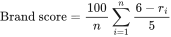
Brand score - Normalized Borda score
- The brand score is calculated using a normalized Borda score. Borda count is a voting method: each ballot awards points by position instead of naming one winner. Our ranking responses from the LLM are always fixed to 5 answers, so we assign 100 points for rank 1, then 80, 60, 40, 20 — and 0 if the brand is missing.
where

- This way we can calculate a common score for all brands mentioned across model responses. The score reflects both how high the brand was ranked and how frequently it was mentioned.
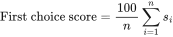
First choice score - adjusted MRR - top-rank indicator
- The first choice score is based on Mean Reciprocal Rank (a common search-engine measure), but adapted to measure the position of a specific brand across repeated ranked responses.
- Each occurrence receives a reciprocal-position score: 100 for 1st, 50 for 2nd, 33.3 for 3rd, 25 for 4th, 20 for 5th, and 0 when the brand is not mentioned. The scores are averaged across all responses.
where

- No rank below 1st place gets more than 50, so the score is heavily driven by first places.
Browse other categories
Each one is a single question put to every active AI model, many times over.
Or scroll for more
- CRM Software#1 HubSpotCRM SoftwareWhat CRM software would you recommend?#1HubSpot95#2Salesforce85#3Zoho539 ranked
- Consulting companies for AI transformation#1 McKinsey & CompanyConsulting companies for AI transformationWhich consulting firm should a Fortune 500 company hire for an AI transformation?#1McKinsey & Company87#2Accenture78#3Boston Consulting Group638 ranked
- MBA Programs ROI#1 Stanford Graduate School of BusinessMBA Programs ROIWhich MBA program gives you the best return on investment?#1Stanford Graduate School of Business66#2Wharton46#3Harvard Business School4439 ranked
- AI models for coding#1 AnthropicAI models for codingWhich AI model would you recommend for coding?#1Anthropic90#2OpenAI74#3Google5215 ranked
- Business Podcasts#1 How I Built ThisBusiness PodcastsWhich business podcast would you recommend?#1How I Built This77#2Acquired54#3Masters of Scale4131 ranked
- Business Class airlines#1 Qatar AirwaysBusiness Class airlinesWhich airline would you recommend for business-class travel?#1Qatar Airways87#2Singapore Airlines84#3Emirates4216 ranked
- EV vehicles#1 TeslaEV vehiclesWhich EV brand would you recommend?#1Tesla90#2Hyundai76#3Kia3714 ranked
- Watch brands#1 OmegaWatch brandsWhich watch brand would you wear on a first date?#1Omega73#2Cartier62#3Seiko4331 ranked
- Neobanks uk#1 Starling BankNeobanks ukWhat neobank would you recommend for a UK startup?#1Starling Bank87#2Revolut69#3Tide6018 ranked
- No Code Platforms#1 AirtableNo Code PlatformsWhat are the best no-code platforms for a company to build internal workflows and apps without developers?#1Airtable81#2Microsoft54#3Zapier3328 ranked
- AI Brand Visibility Tools#1 ProfoundAI Brand Visibility ToolsWhat AI brand visibility tool would you recommend?#1Profound73#2Peec AI48#3Semrush4031 ranked
- Airtable agencies#1 GAP ConsultingAirtable agenciesWhich Airtable agency would you recommend?#1GAP Consulting43#2Openside33#3On2Air31153 ranked
- Review response Hospitality#1 TrustYouReview response HospitalityWhat review response platform would you recommend for a hotel?#1TrustYou81#2Revinate67#3ReviewPro6223 ranked
- Form builders for small business#1 JotformForm builders for small businessWhich form builder would you recommend for a small business?#1Jotform97#2Typeform66#3Google Forms5416 ranked
- Running shoes for marathon#1 NikeRunning shoes for marathonWhat brand of running shoes would you recommend for a marathon?#1Nike85#2ASICS80#3Adidas488 ranked
Ask your own question of every model
Tell us what to ask and how wide to sample it — we run it and send back the report.