What brand of running shoes would you recommend for a marathon
- Models
- 14
- Answers
- 140
- Brands named
- 8
What brand of running shoes would you recommend for a marathon
14 AI models · 10 answers per model · ranked by score
ordered by brand score: 100 pts for rank 1 → 20 for rank 5 · no mention = 0
- #1Nike84brand score74first choice12345
- gpt-6-luna 3.5
- #2ASICS81brand score65first choice
- #3Saucony46brand score29first choice
- #4Adidas45brand score28first choice
- #5Hoka18brand score14first choice
Show 3 moreShow less
- #6Brooks16brand score11first choice
- #7New Balance9brand score7first choice
- #8Reebok0brand score0first choice
Each bar covers the middle half of one model’s answers (Q1–Q3); the line inside it is that model’s median rank for the times it recommended the brand. The badge under a brand says how far apart the models are on it, and “first choice” scores rank 1 far above the rest — a brand can place well overall and still rarely lead an answer.
Swipe left for the full report
Brand by model
Median rank each model gave each brand.
Scroll the table sideways to see every model →
| gpt-6.1-sol | gpt-6-luna | gpt-6-sol | gpt-6-astra | gpt-5.6-luna | gpt-5.6-sol | gpt-5.6-terra | gpt-5.5 | gpt-5.4 | gpt-5.2 | gpt-5 | o3 | gpt-4.1 | o1 | |
|---|---|---|---|---|---|---|---|---|---|---|---|---|---|---|
| Nike | 1.0 | 3.5 | 3.0 | 2.0 | 5.0 | 2.0 | 2.0 | 1.5 | 1.0 | 1.0 | 1.0 | 1.0 | 1.0 | 1.0 |
| ASICS | 2.0 | 1.0 | 1.0 | 1.0 | 1.0 | 1.0 | 1.0 | 1.5 | 2.0 | 2.0 | 3.0 | 3.0 | 3.0 | 3.0 |
| Saucony | 4.0 | 2.5 | 2.0 | 3.5 | 2.0 | 4.0 | 4.0 | 3.0 | 4.0 | 3.0 | 4.0 | 5.0 | 5.0 | 5.0 |
| Adidas | 3.0 | 5.0 | 4.0 | 3.5 | 5.0 | 3.0 | 4.0 | 4.0 | 3.0 | 4.0 | 2.0 | 3.5 | 2.0 | 2.0 |
| Hoka | 5.0 | 5.0 | 5.0 | 5.0 | 4.0 | — | 5.0 | 5.0 | 5.0 | 5.0 | 5.0 | 2.0 | 4.0 | 2.0 |
| Brooks | — | 3.0 | 4.0 | 5.0 | 3.0 | — | — | 5.0 | — | 5.0 | 5.0 | 4.0 | 4.0 | 4.0 |
| New Balance | 5.0 | 4.5 | 5.0 | 5.0 | 4.0 | 5.0 | 5.0 | 5.0 | 5.0 | — | — | 4.5 | 5.0 | 5.0 |
| Reebok | — | — | — | — | — | — | — | — | — | — | — | — | — | 5.0 |
A dash means that model never named the brand in any of its runs. Deeper blue is better: rank 1 is the brand a model would recommend first.
Where the models disagree
4 of 8 brands split the panel. Each mark is one model's score for the brand, on the same 0–100 scale as the ranking.
- #4Adidas0100
gpt-5.6-luna 4 → gpt-5 68
- #3Saucony0100
o1 8 → gpt-5.6-luna 76
- #1Nike0100
gpt-5.6-luna 36 → o3 100
- #6Brooks0100
gpt-5.4 0 → gpt-5.6-luna 52 · 4 of 14 never named it
- from here down, the models agree
- #5Hoka0100
gpt-5.6-sol 0 → o3 74 · 1 of 14 never named it
- #2ASICS0100
o3 50 → gpt-6-sol 100
A hollow mark is a model that never named the brand in any of its runs, which scores 0. Agreement is not endorsement — a brand every model ignores equally agrees just as tightly as one they all rank first.
Named, and named first
Across → how frequently the panel names the brand at all.
Up ↑ how often the answers that name it put it first.
- 1Nike100/58
- 2ASICS99/42
- 3Saucony91/0
- 4Adidas81/0
- 5Hoka54/0
- 6Brooks39/0
- 7New Balance34/0
- 8Reebok1/0
The horizontal line sits at 20% — the rate a named brand would lead at if the models were picking one of its 5 slots at random. Above it they are choosing it first on purpose. Both figures average across models, so a thinly sampled model counts the same as a heavily sampled one.
What the models actually said
- Models
- 14
- Answers
- 140
Nike leads with a score of 84 of 100, ranked by 14 of 14 models.
Two brands lead this panel: Nike, with a brand score of 84.29, and ASICS, at 81. Every model ranks both. What separates the models is which of the two comes first. Below them sit Saucony (46.14) and Adidas (45.29), both ranked by all 14 models but never placed first. Hoka (18.14), Brooks (16.43) and New Balance (8.57) form a lower tier, and Reebok appears once, from a single model.
The main split: Nike versus ASICS
The clearest pattern follows model lineage. gpt-4.1, gpt-5, gpt-5.4, o1 and o3 all score Nike 100 with a median rank of 1. The same models place ASICS third or lower: gpt-5 at 66, gpt-4.1 at 62, o1 at 56 and o3 at 50.
The gpt-5.6 and gpt-6 models reverse this. gpt-5.6-luna and gpt-6-sol score ASICS 100. gpt-6-astra and gpt-6-luna give it 96. gpt-5.6-luna drops Nike to 36, typically fifth, and gpt-6-luna (58) and gpt-6-sol (64) also rate it low. gpt-5.2, gpt-5.5 and gpt-6.1-sol sit between the two camps, with both brands near the top.
- 100o350
- 100o156
- 100gpt-4.162
- 100gpt-566
- 100gpt-5.480
- 98gpt-5.282
- 94gpt-6.1-sol78
- 90gpt-5.590
- 78gpt-5.6-sol84
- 84gpt-5.6-terra94
- 78gpt-6-astra96
- 64gpt-6-sol100
- 58gpt-6-luna96
- 36gpt-5.6-luna100
Nike ahead on 7 of 14 models, level on 1
The reasoning shows what drives this. The Nike-first models frame a marathon recommendation as a race-day question. They cite Vaporfly and Alphafly, carbon plates and elite results. The ASICS-first models frame it as a question of which brand is safest for most runners. They point to breadth of range, stability and fit options, and treat Nike's narrow fit, price and durability as reasons to rank it lower.
The sources line up with this split, but the link is a hypothesis, not something the data proves:
- Nike-first models. World Athletics compliance documents and elite-race coverage are recalled mainly by gpt-5.4, gpt-5.2 and o3, which fits the performance framing.
- ASICS-first models. ASICS's source list is dominated by Doctors of Running (63×), a fit- and wear-test-oriented outlet. It is also the most recalled source in the category overall.
- Brand sites. gpt-6-luna and gpt-5.6-luna lean on Nike's own pages rather than independent testing. Why that coincides with a lower Nike score is unclear from the data.
Second tier: Saucony and Adidas
Saucony and Adidas sit close on aggregate score, but different models favour each.
- Saucony scores best with the same models that favour ASICS: gpt-5.6-luna (76), gpt-6-sol (74) and gpt-6-luna (70). It scores worst with o1 (8, named in 4 of 10 runs), gpt-4.1 (20) and o3 (22).
- Adidas shows roughly the reverse. gpt-5 (68), gpt-4.1 (64) and o1 (62) rank it second, while gpt-5.6-luna (4) and o3 (10) name it in only 2 of 10 runs.
So the older and reasoning models tend to pair Nike with Adidas as the racing brands. The newer models tend to pair ASICS with Saucony as the versatile, approachable choices. o3 breaks the pattern by rating Adidas low as well.
Lower tier: individual outliers
In the lower tier, single models stand out rather than whole families.
Hoka is the sharpest case. o3 names it in all 10 runs at a median rank of 2 and scores it 74. Most other models score it in the single digits to mid-20s. o3 drew on Believe in the Run, iRunFar and Canadian Running Magazine for this view. Whether those sources caused its enthusiasm is speculative.
Hoka · 74 points apart on a 0–100 scale
Brooks is carried by gpt-5.6-luna (52), gpt-6-luna (46), o1 (40) and o3 (38). Four models never rank it. New Balance is broadly agreed to be a fifth-place mention. gpt-5.6-terra (30) and gpt-5.6-sol (20) differ mainly in naming it far more often, not in ranking it higher. For Brooks, as with Nike, gpt-6-luna and gpt-5.6-luna lean partly on brand-owned pages.
Where the models agree
The models agree on more than the rankings suggest. Nearly every model credits the same strengths to each brand and recalls the same review outlets: Doctors of Running, Believe in the Run, RunRepeat, Road Trail Run and Runner's World. They differ mainly in how they weigh race-day speed against general suitability for most runners.
What shaped the answers
187 sources across 1780 references, grouped by site from 438 recalled names. The top 5 carry 61% of them.
Sources are what each model recalled as having shaped its view. It does not mean that the sources were actually used in training. Recalled URLs might also be invalid or hallucinated.
runnersworld.com
- ×151/
- ×38/gear/a19663621/best-running-shoes
- ×29Runner’s World /gear
- ×23named without a URL
- ×5/gear/a20865799/best-running-shoes
- ×5/gear/a22103707/best-running-shoes
- ×4/gear/a19663621/best-marathon-running-shoes
- ×4/gear/a20865633/the-best-marathon-shoes
- ×4/gear/a22841910/best-running-shoes
- ×4/shoes
- ×3/gear/a20823411/the-best-running-shoes
- ×3Runner’s World /gear/a20862101/best-running-shoes
- ×3/gear/a20866891/best-marathon-running-shoes
- ×3Runner’s World /gear/a25431491/best-marathon-shoes
- ×2Runner's World Best Running Shoes /gear/a20780979/best-running-shoes
- ×2Runner's World Shoe Reviews /gear/a20865780/the-best-running-shoes
- ×2/gear/a32603497/best-marathon-shoes
- ×1/gear/a19663621/best-adidas-running-shoes
- ×1/gear/a19663621/best-asics-running-shoes
- ×1Runner’s World Shoe Awards 2023 /gear/a19663627/editors-choice-running-shoes
- ×1Runner’s World Shoe Awards 2023 /gear/a19781917/editors-choice-running-shoes
- ×1/gear/a20787812/best-hoka-one-one-running-shoes
- ×1/gear/a20802833/best-nike-running-shoes
- ×1/gear/a20865565/best-asics-running-shoes
- ×1/gear/a20865582/best-hoka-running-shoes
- ×1/gear/a20865590/best-adidas-running-shoes
- ×1Runner’s World Shoe Awards 2023 /gear/a20865596/best-running-shoes
- ×1/gear/a20865617/best-nike-running-shoes
- ×1/gear/a20865650/best-running-shoes
- ×1/gear/a20865655/best-new-balance-running-shoes
- ×1Runner’s World /gear/a20865667/best-running-shoes
- ×1/gear/a20865685/best-saucony-running-shoes
- ×1Runner’s World /gear/a20865690/best-asics-running-shoes
- ×1Runner’s World /gear/a20865695/best-brooks-running-shoes
- ×1/gear/a20865696/best-adidas-running-shoes
- ×1/gear/a20865699/best-nike-running-shoes
- ×1Runner’s World /gear/a20865704/best-nike-running-shoes
- ×1/gear/a20865707/best-saucony-running-shoes
- ×1/gear/a20865737/best-hoka-running-shoes
- ×1/gear/a20865758/best-asics-running-shoes
- ×1/gear/a20865761/best-adidas-running-shoes
- ×1/gear/a20865771/best-nike-running-shoes
- ×1/gear/a20865774/best-asics-running-shoes
- ×1/gear/a20865775/best-asics-running-shoes
- ×1/gear/a20865784/best-nike-running-shoes
- ×1/gear/a20865786/best-saucony-running-shoes
- ×1/gear/a20865790/best-new-balance-running-shoes
- ×1/gear/a20865792/best-nike-running-shoes
- ×1/gear/a20865795/best-brooks-running-shoes
- ×1Runner’s World /gear/a20865813/best-saucony-running-shoes
- ×1Runner’s World /gear/a20865817/best-new-balance-running-shoes
- ×1/gear/a20865857/best-adidas-running-shoes
- ×1/gear/a20866048/best-new-balance-running-shoes
- ×1Runner’s World Shoe Awards 2023 /gear/a20896938/best-marathon-running-shoes
- ×1Runner’s World /gear/a22172236/best-marathon-shoes
- ×1Runner’s World /gear/a25606112/best-new-balance-running-shoes
- ×1Runner’s World /gear/a26059723/best-hoka-running-shoes
- ×1/gear/a33216013/saucony-endorphin-pro-review
- ×1/gear/a36350733/asics-metaspeed-sky-review
- ×1Runner’s World "Best Shoes for Long Runs" 2023 /gear/a39396828/best-long-run-shoes
- ×1Runner’s World Shoe Awards 2024 /gear/a41111822/editors-choice-running-shoes
- ×1Runner’s World /gear/a41190510/adidas-running-shoes-review
- ×1Runner’s World Shoe Awards 2024 /gear/a43157046/editors-choice-running-shoes
- ×1Runner’s World ‘Best Marathon Shoes’ 2024 /gear/g20854681/best-marathon-running-shoes
- ×1Runner’s World Shoe Guide /shoe-guide
- ×1Runner’s World Shoe Lab /shoelab
- ×1Runner’s World Shoe Awards 2024 /shoes-gear
Nike
- gpt-6-luna 3.5
Summary
Nike is named by all 14 models and posts a brand score of 84.29 with a first choice score of 74.27, but the per-model scores span 36–100 (standard deviation 19.02), which the report labels "models split." Five models (gpt-4.1, gpt-5, gpt-5.4, o1 and o3) score it 100 and put it first in every run, with gpt-5.2 (98), gpt-6.1-sol (94) and gpt-5.5 (90) close behind. The shared rationale among these models is performance. They point to the Vaporfly/Alphafly lines, ZoomX foam, carbon plates, measured running-economy gains and elite race results. gpt-5.2 and gpt-5.4 add the breadth of a single-brand training-and-racing rotation. The sources under this theme are mostly race and review outlets. World Athletics and its shoe-compliance documents are cited heavily by gpt-5.4, gpt-5.2 and o3. Believe in the Run and Runner's World recur across nearly every model, and o3 also recalls Kipchoge's INEOS 1:59 coverage and NYC Marathon shoe counts. o1 is the outlier among the top scorers: it rates Nike first on generic cushioning and lightweight claims without naming models.
per-model scores 36–100 of 100 · mean 84 across 14 models
The lower half of the panel separates race-day speed from a general recommendation. gpt-5.6-terra (84), gpt-5.6-sol and gpt-6-astra (78 each) still treat Nike as the racing benchmark. They repeatedly cite narrow fit, lower stability, price and durability as reasons to test it before race day or to rank it behind ASICS. gpt-6-sol (64) never puts it first, gpt-6-luna (58) presents it tentatively, and gpt-5.6-luna (36) typically places it fifth, citing aggressive geometry and cost. Doctors of Running and RunRepeat appear more often in this group. gpt-6-luna and gpt-5.6-luna lean heavily on Nike's own site and Nike Running pages rather than independent testing.
“Nike’s Vaporfly and Alphafly lines dominate elite marathon podiums thanks to their light weight, responsive ZoomX foam and proven carbon-plate efficiency.”
“I rank it fifth because its most performance-focused models can be expensive or demanding, while its fit and aggressive geometry may not suit every marathoner.”
Per model summary
- gpt-4.1
- brand score
- 100
- first choice
- 100
- median rank
- 1.0
- present in
- 10/10
Consistently credits Nike's innovation, especially ZoomX foam, carbon plates, and the Vaporfly/Alphafly lines, citing lightweight design, cushioning, energy return, and widespread use by elite marathoners.
- gpt-5
- brand score
- 100
- first choice
- 100
- median rank
- 1.0
- present in
- 10/10
Frames Nike's Vaporfly/Alphafly super-shoes as the benchmark for marathon racing, citing proven running-economy gains and elite results, while noting premium price, narrow fit, and durability trade-offs.
- gpt-5.2
- brand score
- 98
- first choice
- 95
- median rank
- 1.0
- present in
- 10/10
Emphasizes the depth of Nike's marathon lineup, from proven carbon-plated racers to training shoes that make a single-brand rotation easy, with fit and durability noted as varying by model.
- gpt-5.4
- brand score
- 100
- first choice
- 100
- median rank
- 1.0
- present in
- 10/10
Repeatedly names Nike its top pick for a long track record of elite and amateur marathon success with Vaporfly/Alphafly supershoes, plus a broad ecosystem of training and race-day shoes.
- gpt-6.1-sol
- brand score
- 94
- first choice
- 85
- median rank
- 1.0
- present in
- 10/10
Frequently names Nike the first choice for marathon race-day performance, citing lightweight, cushioned carbon-plated racers, while consistently advising long-run testing because of fit and stability variation.
- o1
- brand score
- 100
- first choice
- 100
- median rank
- 1.0
- present in
- 10/10
Focuses generally on Nike's innovation in lightweight, responsive cushioning that reduces fatigue over long distances, without naming specific models or discussing drawbacks.
- o3
- brand score
- 100
- first choice
- 100
- median rank
- 1.0
- present in
- 10/10
Emphasizes that Nike's ZoomX and carbon-plated Vaporfly/Alphafly have dominated elite podiums and lab tests for energy return, adding broad width and size availability as practical advantages.
- gpt-5.5
- brand score
- 90
- first choice
- 75
- median rank
- 1.5
- present in
- 10/10
Describes Nike as a leading brand for lightweight, propulsive race-day shoes with a strong marathon record, but often ranks it just behind ASICS because of narrow fit, price, and lower stability.
- gpt-5.6-sol
- brand score
- 78
- first choice
- 63
- median rank
- 2.0
- present in
- 10/10
Treats Nike as a marathon-racing benchmark based on carbon-plated shoes and elite success, while consistently flagging narrow fit, lower stability, and durability as reasons to test before race day; its ranking varies between first and second.
- gpt-5.6-terra
- brand score
- 84
- first choice
- 63
- median rank
- 2.0
- present in
- 10/10
Positions Nike as a strong choice for runners prioritizing race-day speed, with influential plated racers and an elite pedigree, repeatedly cautioning that fit and aggressive geometry need careful testing.
- gpt-6-astra
- brand score
- 78
- first choice
- 52
- median rank
- 2.0
- present in
- 10/10
Consistently says Nike would lead if racing performance were the priority, thanks to its carbon-plated shoes, but places it second or third generally because its aggressive racers don't suit every runner's fit or stability needs.
- gpt-6-sol
- brand score
- 64
- first choice
- 38
- median rank
- 3.0
- present in
- 10/10
Repeatedly calls Nike compelling when race-day speed is the priority, but ranks it below ASICS for general use because its racing-oriented fit, feel, and price won't suit everyone.
- gpt-6-luna
- brand score
- 58
- first choice
- 44
- median rank
- 3.5
- present in
- 10/10
Presents Nike more tentatively as worth considering for lightweight, race-oriented shoes with some training options, with repeated advice to test fit and comfort over long runs.
- gpt-5.6-luna
- brand score
- 36
- first choice
- 25
- median rank
- 5.0
- present in
- 10/10
Acknowledges Nike's advanced, responsive racing shoes but typically ranks it around fifth, citing high cost, aggressive geometry, and less forgiving fit and stability for everyday marathoners.
Sources per model
Each model’s own references for this brand, grouped by site. Tile area is that site’s share of the model’s references; tap one for the pages behind it.
runnersworld.com
- ×6/gear/a19663621/best-running-shoes
- ×1Runner's World Best Running Shoes /gear/a20780979/best-running-shoes
nike.com
- ×4/running
- ×2Nike /w/running-shoes-37v7jzy7ok
- ×1Nike /
- ×1Nike /running/road-running-shoes
- ×1/w/running-37v7j
runnersworld.com
worldathletics.org
- ×7/
- ×2World Athletics shoe rules & approved shoe context /about-iaaf/documents/technical-information
- ×1named without a URL
runnersworld.com
- ×1/gear/a19663627/editors-choice-running-shoes
- ×1/gear/a19781917/editors-choice-running-shoes
- ×1/gear/a20865596/best-running-shoes
- ×1/gear/a20896938/best-marathon-running-shoes
- ×1Runner’s World Shoe Awards 2024 /gear/a41111822/editors-choice-running-shoes
- ×1Runner’s World Shoe Awards 2024 /gear/a43157046/editors-choice-running-shoes
- ×1Runner’s World ‘Best Marathon Shoes’ 2024 /gear/g20854681/best-marathon-running-shoes
- ×1Runner’s World Shoe Guide /shoe-guide
- ×1Runner’s World Shoe Lab /shoelab
- ×1Runner’s World Shoe Awards 2024 /shoes-gear
runnersworld.com
- ×1/gear/a20862101/best-running-shoes
- ×1Runner's World /gear/a20865633/the-best-marathon-shoes
- ×1Runner's World /gear/a20865650/best-running-shoes
- ×1/gear/a20865667/best-running-shoes
- ×1/gear/a20865704/best-nike-running-shoes
- ×1Runner's World /gear/a20866891/best-marathon-running-shoes
- ×1Runner's World /gear/a22103707/best-running-shoes
- ×1/gear/a22172236/best-marathon-shoes
- ×1/gear/a25431491/best-marathon-shoes
- ×1Runner's World /gear/a32603497/best-marathon-shoes
Sources are what each model recalled as having shaped its view. It does not mean that the sources were actually used in training. Recalled URLs might also be invalid or hallucinated.
ASICS
also named Asics
Summary
ASICS is the consensus favourite in this category. It has a brand score of 81 and a first choice score of 65.42, and all 14 of the 14 models ranked it. Per-model brand scores run from 50 to 100 with a standard deviation of 16.07, which the report labels "broad agreement". The split is still clear. gpt-5.6-luna and gpt-6-sol scored it 100 and put it first in all 10 runs, and gpt-6-astra and gpt-6-luna each reached 96. The older or reasoning-focused models sit lower: gpt-5 at 66, gpt-4.1 at 62, o1 at 56 and o3 at 50. Those last four never ranked it first, and o3 named it in only 9 of 10 runs.
per-model scores 50–100 of 100 · mean 81 across 14 models
The high scorers share one argument: breadth. They point to a lineup that runs from cushioned, durable trainers to carbon-plated Metaspeed racers, with wide fit and stability options. That range makes ASICS, in their words, a safe or all-around starting point, usually with the caveat that individual fit matters more than brand. The lower rankings keep the same praise for stability, GEL cushioning and durability but add drawbacks. Those models describe some shoes as heavier, the ride as less explosive than rivals, and the brand as slightly behind Nike at the front of elite racing. o3 also cites uneven foams and a polarizing toe box. The sources split along the same line. The top-ranking models lean heavily on review sites such as Doctors of Running, RunRepeat, Runner's World and Believe in the Run, along with ASICS's own site. o3, the lowest scorer, draws on scattered single citations such as WearTesters, Citius Mag and marathon shoe counts.
“Its broad range of fits and generally stable cushioning make it the safest overall marathon recommendation for many runners.”
“However, some models run heavier and the toe-box fit can be polarizing, so it sits slightly lower in recommendation despite strong overall quality.”
Per model summary
- gpt-5.6-luna
- brand score
- 100
- first choice
- 100
- median rank
- 1.0
- present in
- 10/10
Repeatedly describes ASICS as offering a broad range of well-cushioned, stable, performance-oriented shoes with fit options for many foot types. It calls the brand its top all-around recommendation while noting that the right model depends on gait.
- gpt-5.6-sol
- brand score
- 84
- first choice
- 73
- median rank
- 1.0
- present in
- 10/10
Emphasizes ASICS's unusually complete lineup, from durable trainers to carbon-plated racers, with broad fit and stability options, and calls it the safest overall recommendation. Some responses note that choosing among stride-specific racing models takes experimentation.
- gpt-5.6-terra
- brand score
- 94
- first choice
- 85
- median rank
- 1.0
- present in
- 10/10
Positions ASICS as a top all-around brand because of its broad range of stable, cushioned daily trainers and race shoes. It stresses a secure fit and a predictable, less aggressive ride than some super-shoe-focused brands.
- gpt-6-astra
- brand score
- 96
- first choice
- 93
- median rank
- 1.0
- present in
- 10/10
Repeatedly calls ASICS its best all-around starting point for an unspecified runner, citing a range that spans cushioned trainers, supportive options, and lightweight racers. It consistently adds that individual fit matters more than brand ranking.
- gpt-6-luna
- brand score
- 96
- first choice
- 90
- median rank
- 1.0
- present in
- 10/10
Presents ASICS as a strong all-around starting point because its range covers cushioned trainers, stable options, and lightweight race shoes. It consistently advises trying shoes on, since fit and comfort matter more than the brand.
- gpt-6-sol
- brand score
- 100
- first choice
- 100
- median rank
- 1.0
- present in
- 10/10
Repeatedly makes ASICS its first choice because the range covers both cushioned training shoes and lighter marathon racing options. It frames this breadth as making it easier to find a comfortable fit for training and race day.
- gpt-5.5
- brand score
- 90
- first choice
- 75
- median rank
- 1.5
- present in
- 10/10
Often names ASICS a top or near-top all-around pick, covering both high-mileage training and race day with dependable comfort, fit, and stability. Several responses place it just behind Nike because its presence in elite racing is somewhat less dominant.
- gpt-5.2
- brand score
- 82
- first choice
- 55
- median rank
- 2.0
- present in
- 10/10
Repeatedly presents ASICS as a dependable brand for high-mileage marathon training blocks, citing stable geometry, reliable cushioning, and durability. It adds that race-day options have become competitive, so runners can stay within one brand from training to racing.
- gpt-5.4
- brand score
- 80
- first choice
- 50
- median rank
- 2.0
- present in
- 10/10
Consistently says ASICS 'ranks highly' as a safe recommendation that balances performance with dependable fit, durability, stability, and comfort. It describes the brand as suiting a broad range of runners who prefer predictability over hype.
- gpt-6.1-sol
- brand score
- 78
- first choice
- 58
- median rank
- 2.0
- present in
- 10/10
Describes ASICS as balancing long-distance comfort, training options, and competitive racers, usually ranking it behind Nike or third for performance. It says ASICS could be first for beginners or for runners who prioritize comfort and stability over speed.
- gpt-4.1
- brand score
- 62
- first choice
- 36
- median rank
- 3.0
- present in
- 10/10
Consistently frames ASICS around comfort, cushioning (GEL), stability, and durability, highlighting Gel-Nimbus, Gel-Kayano, and Metaspeed models as suited to injury-prone or stability-seeking marathoners. It often notes the shoes can be slightly heavier or less responsive than top rivals.
- gpt-5
- brand score
- 66
- first choice
- 38
- median rank
- 3.0
- present in
- 10/10
Focuses almost entirely on the Metaspeed Sky/Edge racing series, describing its variants as tuned to different stride mechanics and offering a stable, efficient ride. It repeatedly notes the series is slightly less bouncy or explosive than the top competitors.
- o1
- brand score
- 56
- first choice
- 33
- median rank
- 3.0
- present in
- 10/10
Consistently emphasizes stability, support, and shock absorption, often through GEL cushioning, for injury prevention and overpronation control over long distances. Some responses note that ASICS shoes can feel heavier.
- o3
- brand score
- 50
- first choice
- 29
- median rank
- 3.0
- present in
- 9/10
Weighs the competitive Metaspeed carbon racers and Gel-Kayano/Nimbus training staples against drawbacks. Those drawbacks include heavier legacy models, a polarizing toe-box fit, uneven foams across models, and a conservative image, which keep ASICS slightly lower in its rankings.
Sources per model
Each model’s own references for this brand, grouped by site. Tile area is that site’s share of the model’s references; tap one for the pages behind it.
asics.com
- ×4/us/en-us/running
- ×1ASICS /
- ×1ASICS /us/en-us
- ×1ASICS /us/en-us/running-advice/guide-to-marathon-running
- ×1ASICS Running Shoes /us/en-us/running-shoes/c/aa50100000
runnersworld.com
runnersworld.com
runnersworld.com
- ×3named without a URL
- ×1/gear/a20865690/best-asics-running-shoes
- ×1Runner's World /gear/a20866891/best-marathon-running-shoes
- ×1Runner's World /gear/a22103707/best-running-shoes
Sources are what each model recalled as having shaped its view. It does not mean that the sources were actually used in training. Recalled URLs might also be invalid or hallucinated.
Saucony
Summary
Saucony earns a brand score of 46.14 and a first choice score of 28.82. It is ranked by all 14 models, but no model put it first in any run. The panel is clearly split: per-model brand scores run from 8 to 76, with a standard deviation of 19.65. The strongest support comes from the gpt-6 and gpt-5.6-luna models. gpt-5.6-luna scores it 76, gpt-6-sol 74 and gpt-6-luna 70, and all three typically place it just behind ASICS. The weakest support comes from o1, at 8 and named in only 4 of 10 runs, along with gpt-4.1 at 20 and o3 at 22. The middle group, including gpt-5.2, gpt-5.5, gpt-6-astra and gpt-5.4, mostly settles on third or fourth.
per-model scores 8–76 of 100 · mean 46 across 14 models
The themes are fairly consistent even where the rankings differ. Most models describe a versatile lineup that runs from daily trainers to plated Endorphin racers, with a smooth, approachable ride and good value. They then explain the lower placement in one of three ways:
- Visibility. gpt-5.4, gpt-5.5, gpt-5.6-sol and gpt-4.1 point to weaker mainstream visibility and elite-racing mindshare rather than a performance gap.
- Fit. The gpt-6 models and gpt-5.6-luna stress that fit varies from model to model.
- Specific drawbacks. o3 and o1 cite faster foam compression, firmness and a narrow fit.
The sources behind the favourable consensus are mostly independent review sites: Doctors of Running, Believe in the Run, Road Trail Run, Runner's World and RunRepeat. gpt-6-luna and gpt-5.6-luna also lean heavily on Saucony's own site. The critical o3 view draws on a different set of sources, including Reddit durability threads, Fleet Feet staff feedback and PodiumRunner lab tests. o1 cites scattered sources such as Marathon Handbook and RunnerClick.
“I place it fourth not because it is weak, but because its overall mainstream visibility and elite-racing dominance are a bit lower than the brands above.”
“Fit can also be tricky for wider feet, so I rank Saucony just outside the podium.”
Per model summary
- gpt-5.6-luna
- brand score
- 76
- first choice
- 47
- median rank
- 2.0
- present in
- 10/10
Emphasizes lightweight, responsive shoes with dependable cushioning, while cautioning that fit and ride vary between models, so careful selection is needed; often ranks it just below ASICS.
- gpt-6-sol
- brand score
- 74
- first choice
- 45
- median rank
- 2.0
- present in
- 10/10
Describes a useful mix of comfortable daily trainers and lighter race options suited to a full training cycle, usually ranked just behind ASICS with the caveat that fit should be checked across models.
- gpt-6-luna
- brand score
- 70
- first choice
- 42
- median rank
- 2.5
- present in
- 10/10
Notes a versatile range covering everyday mileage and racing, but repeatedly says individual fit and ride matter more than brand, often placing it just behind ASICS.
- gpt-5.2
- brand score
- 56
- first choice
- 32
- median rank
- 3.0
- present in
- 10/10
Presents Saucony as a well-rounded marathon 'system' of plated racers plus high-mileage trainers with smooth transitions and good value, while noting it is less ubiquitous or dominant at the elite front than Nike.
- gpt-5.5
- brand score
- 54
- first choice
- 31
- median rank
- 3.0
- present in
- 10/10
Highlights a balance of cushioning, responsiveness, durability and value across trainers and race shoes, with a less extreme feel, while noting slightly smaller elite-marathon presence than Nike or ASICS.
- gpt-6-astra
- brand score
- 54
- first choice
- 33
- median rank
- 3.5
- present in
- 10/10
Frames Saucony as a versatile training-to-race-day option balancing long-run comfort and race performance, typically ranked third or fourth and explained as a slight edge given to other brands rather than unsuitability.
- gpt-5
- brand score
- 36
- first choice
- 24
- median rank
- 4.0
- present in
- 10/10
Focuses on the Endorphin Pro line's smooth rolling geometry (SPEEDROLL) and PWRRUN PB foam, framing it as durable, good value and approachable, but consistently a touch less springy or propulsive than the top super-shoes.
- gpt-5.4
- brand score
- 38
- first choice
- 25
- median rank
- 4.0
- present in
- 10/10
Calls Saucony an excellent, smooth-riding and versatile marathon brand, and repeatedly explains its lower ranking as a matter of mainstream visibility and elite-racing mindshare rather than performance.
- gpt-5.6-sol
- brand score
- 52
- first choice
- 33
- median rank
- 4.0
- present in
- 10/10
Stresses a cohesive lineup that progresses from daily trainers to plated racers with a smooth, approachable ride, while noting its racers are less dominant at the elite marathon level than higher-ranked brands.
- gpt-5.6-terra
- brand score
- 44
- first choice
- 29
- median rank
- 4.0
- present in
- 10/10
Describes a balanced mix of comfortable trainers and energetic race shoes with accommodating fit and width options, ranking it lower mainly for less elite visibility or retail availability than other brands.
- gpt-6.1-sol
- brand score
- 42
- first choice
- 26
- median rank
- 4.0
- present in
- 10/10
Presents a well-rounded lineup of cushioned trainers and racers for the whole marathon cycle, typically ranked fourth behind more racing-specialized brands, while noting it could be the best personal fit.
- gpt-4.1
- brand score
- 20
- first choice
- 16
- median rank
- 5.0
- present in
- 7/10
Describes Saucony, especially the Endorphin series, as lightweight, responsive and comfortable for marathoners, but repeatedly notes it has less mainstream visibility and is less often chosen by elite racers than Nike, ASICS or Adidas.
- o1
- brand score
- 8
- first choice
- 8
- median rank
- 5.0
- present in
- 4/10
Describes balanced, comfortable shoes with smooth transitions and moderate cushioning, but notes some firmness, less energetic bounce or a narrower fit compared with competitors.
- o3
- brand score
- 22
- first choice
- 16
- median rank
- 5.0
- present in
- 7/10
Credits the Endorphin Pro line for a lively ride and good value, but consistently flags drawbacks such as faster foam compression, narrow or inconsistent fit, and patchier availability that lower its ranking.
Sources per model
Each model’s own references for this brand, grouped by site. Tile area is that site’s share of the model’s references; tap one for the pages behind it.
saucony.com
- ×3/
- ×2Saucony Running Shoes /en/running-shoes
- ×1/en/blog/road-running
- ×1Saucony Running /en/running
- ×1Saucony Running /US/en/running
- ×1Saucony Running /US/en/running-shoes
no URL recalled
- ×2named without a URL
runnersworld.com
- ×1/gear/a20862101/best-running-shoes
- ×1Runner's World /gear/a20865633/the-best-marathon-shoes
- ×1/gear/a20865813/best-saucony-running-shoes
- ×1Runner's World /gear/a22103707/best-running-shoes
- ×1named without a URL
Sources are what each model recalled as having shaped its view. It does not mean that the sources were actually used in training. Recalled URLs might also be invalid or hallucinated.
Adidas
also named adidas
Summary
Adidas holds a mid-table position, with a brand score of 45.29 and a first choice score of 27.71. Every one of the 14 models ranked it at some point, but none placed it first in any run. Its points come entirely from second-to-fifth placements. Per-model scores run from 4 to 68, with a standard deviation of 20.85, which the report labels "models split." The highest scores come from gpt-5 (68), gpt-5.6-sol and gpt-6.1-sol (66 each) and gpt-4.1 (64), all with median ranks of 2 or 3. At the bottom, gpt-5.6-luna (4) and o3 (10) named the brand in only 2 of 10 runs, and gpt-6-luna (20) usually put it fifth.
per-model scores 4–68 of 100 · mean 45 across 14 models
The reasoning follows a consistent pattern. Models credit Adidas with strong racing credentials, citing the Adizero Adios Pro line, Lightstrike Pro foam, EnergyRods and world-record or major-marathon results. Older models such as gpt-4.1 and o1 focus instead on Boost cushioning and energy return. The common limitation is fit and ride. Most newer models describe the shoes as firm, aggressive or polarizing, recommend trying them before committing, and rank Adidas below Nike and often ASICS. The sources behind these views are mostly review and testing outlets: Believe in the Run, Road Trail Run, Runner's World, Doctors of Running and RunRepeat, which gpt-6-astra recalled 9 times. The performance claims also draw on World Athletics, which gpt-5 cited 4 times for records. Several models, including gpt-5.4, also lean on the official adidas site.
“The Adizero lineup is proven at the highest levels, with multiple major wins and records highlighting its efficiency and propulsion.”
“I place it below Nike and ASICS mainly because its fit and ride can feel more preference-dependent for everyday marathon trainees.”
Per model summary
- gpt-4.1
- brand score
- 64
- first choice
- 40
- median rank
- 2.0
- present in
- 8/10
Consistently highlights Boost midsole technology and the lightweight Adizero line, citing energy return, comfort over long distances, and race-day reliability for both competitive and recreational runners.
- gpt-5
- brand score
- 68
- first choice
- 42
- median rank
- 2.0
- present in
- 9/10
Focuses on the Adizero Adios Pro series' world-record and major-race performances with Lightstrike Pro foam and EnergyRods, while repeatedly noting a firmer ride and occasional durability or fit trade-offs.
- o1
- brand score
- 62
- first choice
- 38
- median rank
- 2.0
- present in
- 8/10
Repeatedly centers on Boost midsole technology and energy return, pairing it with stability, durability, and consistent performance over long distances.
- gpt-5.4
- brand score
- 60
- first choice
- 33
- median rank
- 3.0
- present in
- 10/10
Cites the Adizero line and long elite road-racing heritage, consistently ranking it just below Nike and ASICS because fit and ride are more preference-dependent.
- gpt-5.6-sol
- brand score
- 66
- first choice
- 39
- median rank
- 3.0
- present in
- 10/10
Emphasizes highly competitive, efficient racers with responsive foam and EnergyRods, usually ranked just behind Nike because fastest models have aggressive geometry or less accommodating fits that need testing.
- gpt-6.1-sol
- brand score
- 66
- first choice
- 39
- median rank
- 3.0
- present in
- 10/10
Positions Adidas as a close second or third with competitive racing shoes combining responsive cushioning and efficient designs, while noting a distinctive or less accommodating fit and ride that requires careful testing.
- gpt-6-astra
- brand score
- 52
- first choice
- 31
- median rank
- 3.5
- present in
- 10/10
Calls Adidas an excellent performance-focused choice with responsive cushioning and stiffening elements, placing it behind Nike or fourth because racing fit and geometry demand careful long-run testing, though it could rank higher for PB attempts.
- o3
- brand score
- 10
- first choice
- 7
- median rank
- 3.5
- present in
- 2/10
Highlights the Adizero Adios Pro's efficiency with Lightstrike Pro foam and EnergyRods, while noting firmer foam, fit quirks, and limited availability keep it behind Nike.
- gpt-5.2
- brand score
- 32
- first choice
- 19
- median rank
- 4.0
- present in
- 7/10
Credits Adidas with high-credibility Adizero racing shoes and a firm, snappy ride, but repeatedly says fit and feel are polarizing, making it a less universally safe pick.
- gpt-5.5
- brand score
- 46
- first choice
- 28
- median rank
- 4.0
- present in
- 10/10
Describes Adidas as having strong marathon racing credibility suited to fast runners wanting a propulsive feel, typically ranking it fourth because models can feel firm, aggressive, or less forgiving for everyday marathoners.
- gpt-5.6-terra
- brand score
- 46
- first choice
- 28
- median rank
- 4.0
- present in
- 10/10
Frames Adidas as strong for runners who like energetic foam and a firm, propulsive ride, while repeatedly cautioning that its polarizing fit and ride make trying them before committing important.
- gpt-6-sol
- brand score
- 38
- first choice
- 25
- median rank
- 4.0
- present in
- 10/10
Describes compelling racing shoes plus training options, typically ranking it fourth because its distinctive, preference-dependent fit and feel warrant trying before committing.
- gpt-5.6-luna
- brand score
- 4
- first choice
- 4
- median rank
- 5.0
- present in
- 2/10
Notes fast, efficient shoes with strong energy return, ranking it fifth because its racing-oriented geometry and fit feel specialized and less universally comfortable.
- gpt-6-luna
- brand score
- 20
- first choice
- 16
- median rank
- 5.0
- present in
- 7/10
Presents Adidas as offering both lightweight racers and cushioned trainers but ranks it fourth or fifth because fit and feel may not suit everyone, stressing comparison and try-ons.
Sources per model
Each model’s own references for this brand, grouped by site. Tile area is that site’s share of the model’s references; tap one for the pages behind it.
runnersworld.com
runnersworld.com
- ×1/gear/a20862101/best-running-shoes
- ×1Runner's World /gear/a20865633/the-best-marathon-shoes
- ×1Runner's World /gear/a22103707/best-running-shoes
- ×1/gear/a25431491/best-marathon-shoes
- ×1Runner's World /gear/a32603497/best-marathon-shoes
- ×1/gear/a41190510/adidas-running-shoes-review
- ×1named without a URL
no URL recalled
- ×2named without a URL
Sources are what each model recalled as having shaped its view. It does not mean that the sources were actually used in training. Recalled URLs might also be invalid or hallucinated.
Hoka
also named HOKA, Hoka One One
Summary
Hoka holds a modest position in this panel, with a brand score of 18.14 and a first choice score of 13.82. It is widely present: 13 of the 14 models ranked it. No model ever placed it first in any run, however, and most of them settle it at the bottom of their shortlists. The GPT-5 and GPT-6 families mostly give it a median rank of 5, and per-model brand scores mostly fall in the single digits to mid-20s. The report labels the standard deviation of 17.64 as broad agreement, but the 0–74 span hides one clear outlier. o3 named Hoka in all 10 runs at a median rank of 2 and scored it 74. The gap between that and the lowest model is the main source of disagreement.
Hoka · 74 points apart on a 0–100 scale
The reasoning is consistent across models. Hoka is credited with maximal cushioning and rocker geometry that reduce impact and keep legs fresher late in a marathon, and the Clifton, Bondi, Carbon X and Rocket X lines are cited by name. The recurring reason for the lower rank is that its high-stack ride is preference-dependent. Models describe it as polarizing in fit and stability and slightly less snappy at race pace than rival supershoes. Several, notably gpt-6-astra and gpt-6.1-sol, stress that a well-fitting Hoka could outrank the brands above it. The cushioning and comfort theme rests mostly on Believe in the Run, Doctors of Running, Runner's World, RunRepeat and Road Trail Run, along with Hoka's own site. o3's more favorable view draws heavily on Believe in the Run video and written reviews, iRunFar testing and Canadian Running Magazine.
“Hoka’s maximal-cushion midsoles and rockered geometry excel during the late miles of a marathon when fatigue and joint impact peak.”
“I rank it fifth not because it is weak, but because the brands above feel slightly more established or broadly proven specifically in the marathon racing conversation.”
Per model summary
- o1
- brand score
- 16
- first choice
- 10
- median rank
- 2.0
- present in
- 2/10
Highlights Hoka's thick, maximal cushioning for reducing impact and joint stress over long distances, combined with stability and a smooth ride.
- o3
- brand score
- 74
- first choice
- 46
- median rank
- 2.0
- present in
- 10/10
Repeatedly cites Hoka's maximal cushioning and rocker geometry in models like the Clifton, Carbon X, and Rocket X 2 for reducing fatigue while staying light, with occasional notes on instability or trailing Nike in pure speed.
- gpt-4.1
- brand score
- 26
- first choice
- 17
- median rank
- 4.0
- present in
- 7/10
Consistently highlights Hoka's maximalist cushioning for reducing fatigue and joint impact over long distances, while noting some runners find the shoes bulky or less responsive for racing.
- gpt-5.6-luna
- brand score
- 22
- first choice
- 15
- median rank
- 4.0
- present in
- 6/10
Emphasizes substantial cushioning and a smooth rocker transition that reduce impact, while noting its high-stack geometry and fit feel less natural to runners preferring traditional, lower-profile shoes.
- gpt-5
- brand score
- 26
- first choice
- 20
- median rank
- 5.0
- present in
- 9/10
Focuses on Hoka's rockered geometry and cushioning (often citing the Rocket X line) that keep legs fresh late in a marathon, while noting it trails the snappiest supershoes in top-end pop and has fit or geometry quirks.
- gpt-5.2
- brand score
- 22
- first choice
- 19
- median rank
- 5.0
- present in
- 9/10
Describes Hoka as excellent for high-cushion comfort and long training miles, but ranks it lower because its geometry, stability, and fit are polarizing and the ride can feel less snappy at race pace.
- gpt-5.4
- brand score
- 20
- first choice
- 19
- median rank
- 5.0
- present in
- 9/10
Repeatedly places Hoka fifth, crediting its protective cushioning and long-run comfort while associating other brands more strongly with proven, sharper marathon racing performance.
- gpt-5.5
- brand score
- 8
- first choice
- 8
- median rank
- 5.0
- present in
- 4/10
Frames Hoka as a cushioning- and comfort-focused option for high-mileage training, ranked fifth because its tall, distinctive geometry is preference-dependent and less universally recommended for racing.
- gpt-5.6-terra
- brand score
- 2
- first choice
- 2
- median rank
- 5.0
- present in
- 1/10
Presents Hoka as suited to runners prioritizing cushioning and protection, with a caution that the high-stack rocker feel isn't ideal for everyone and should be tested on long runs.
- gpt-6-astra
- brand score
- 14
- first choice
- 14
- median rank
- 5.0
- present in
- 7/10
Repeatedly calls Hoka worth considering for substantial cushioning and a rockered ride, ranking it fifth because that ride is preference-dependent, while noting it could be the best choice if it fits.
- gpt-6-luna
- brand score
- 4
- first choice
- 4
- median rank
- 5.0
- present in
- 2/10
Describes Hoka as good for a highly cushioned long-run feel but stresses its distinctive shape and ride don't suit everyone, recommending a test run first.
- gpt-6-sol
- brand score
- 6
- first choice
- 6
- median rank
- 5.0
- present in
- 3/10
Calls Hoka worth considering for cushioned, rockered rides, ranking it fifth only because the feel is personal and preference-dependent, not because it is a poor marathon choice.
- gpt-6.1-sol
- brand score
- 14
- first choice
- 14
- median rank
- 5.0
- present in
- 7/10
Consistently ranks Hoka fifth for its preference-dependent cushioned, rockered geometry, while stressing that a well-fitting Hoka could outrank higher-placed brands, especially when comfort is the priority.
Sources per model
Each model’s own references for this brand, grouped by site. Tile area is that site’s share of the model’s references; tap one for the pages behind it.
runnersworld.com
- ×2/gear/a19663621/best-running-shoes
- ×1Runner’s World /
- ×1/gear/a20865737/best-hoka-running-shoes
runnersworld.com
- ×3named without a URL
- ×1/gear/a20865633/the-best-marathon-shoes
- ×1/gear/a22103707/best-running-shoes
- ×1Runner’s World /gear/a26059723/best-hoka-running-shoes
no URL recalled
- ×1named without a URL
Sources are what each model recalled as having shaped its view. It does not mean that the sources were actually used in training. Recalled URLs might also be invalid or hallucinated.
How this was measured
The question
- Unaided brand recommendation question: “What brand of running shoes would you recommend for a marathon”
- The prompt asks each model to return exactly 5 brands, ranked 1 to 5, and for each one a reason for the recommendation and the sources that informed it.
Sampling
- Models are not deterministic, so the question is asked over and over — 10 answers per model
- Spellings of the same brand are normalized to the most commonly used form before counting
Measures of Position: Median and Quartiles
- Median value indicates that in 50% of answers the brand held this position or higher.
- Quartiles help visualize the spread of rankings per brand. Q1 indicates that 25% of answers had this rank or higher. Q3 means that 75% of answers ranked the brand as X or better.
- Medians and quartiles are computed only from answers where the brand was present.
Coverage
- Count of answers in which the given brand was named, as a percentage.
Brand score - Normalized Borda score
- The brand score is calculated using a normalized Borda score. Borda count is a voting method: each ballot awards points by position instead of naming one winner. Our ranking responses from the LLM are always fixed to 5 answers, so we assign 100 points for rank 1, then 80, 60, 40, 20 — and 0 if the brand is missing.
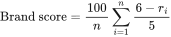
where

- This way we can calculate a common score for all brands mentioned across model responses. The score reflects both how high the brand was ranked and how frequently it was mentioned.
First choice score - adjusted MRR - top-rank indicator
- The first choice score is based on Mean Reciprocal Rank (a common search-engine measure), but adapted to measure the position of a specific brand across repeated ranked responses.
- Each occurrence receives a reciprocal-position score: 100 for 1st, 50 for 2nd, 33.3 for 3rd, 25 for 4th, 20 for 5th, and 0 when the brand is not mentioned. The scores are averaged across all responses.
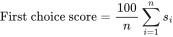
where

- No rank below 1st place gets more than 50, so the score is heavily driven by first places.
Browse other categories
Each one is a single question put to every active AI model, many times over.
Or scroll for more
- CRM Software#1 HubSpotCRM SoftwareWhat CRM software would you recommend?#1HubSpot95#2Salesforce85#3Zoho539 ranked
- Consulting companies for AI transformation#1 McKinsey & CompanyConsulting companies for AI transformationWhich consulting firm should a Fortune 500 company hire for an AI transformation?#1McKinsey & Company87#2Accenture78#3Boston Consulting Group638 ranked
- MBA Programs ROI#1 Stanford Graduate School of BusinessMBA Programs ROIWhich MBA program gives you the best return on investment?#1Stanford Graduate School of Business66#2Wharton46#3Harvard Business School4439 ranked
- AI models for coding#1 AnthropicAI models for codingWhich AI model would you recommend for coding?#1Anthropic90#2OpenAI74#3Google5215 ranked
- Business Podcasts#1 How I Built ThisBusiness PodcastsWhich business podcast would you recommend?#1How I Built This77#2Acquired54#3Masters of Scale4131 ranked
- Business Class airlines#1 Qatar AirwaysBusiness Class airlinesWhich airline would you recommend for business-class travel?#1Qatar Airways87#2Singapore Airlines84#3Emirates4216 ranked
- EV vehicles#1 TeslaEV vehiclesWhich EV brand would you recommend?#1Tesla91#2Hyundai74#3Kia3514 ranked
- Watch brands#1 OmegaWatch brandsWhich watch brand would you wear on a first date?#1Omega79#2Cartier64#3Seiko4432 ranked
- Neobanks uk#1 Starling BankNeobanks ukWhat neobank would you recommend for a UK startup?#1Starling Bank87#2Revolut69#3Tide6018 ranked
- No Code Platforms#1 AirtableNo Code PlatformsWhat are the best no-code platforms for a company to build internal workflows and apps without developers?#1Airtable82#2Microsoft Power Apps54#3Zapier3923 ranked
- AI Brand Visibility Tools#1 ProfoundAI Brand Visibility ToolsWhat AI brand visibility tool would you recommend?#1Profound73#2Peec AI48#3Semrush4031 ranked
- Airtable agencies#1 GAP ConsultingAirtable agenciesWhich Airtable agency would you recommend?#1GAP Consulting43#2Openside33#3On2Air31153 ranked
- Review response Hospitality#1 TrustYouReview response HospitalityWhat review response platform would you recommend for a hotel?#1TrustYou81#2Revinate67#3ReviewPro6223 ranked
- Form builders for small business#1 JotformForm builders for small businessWhich form builder would you recommend for a small business?#1Jotform97#2Typeform66#3Google Forms5416 ranked
Ask your own question of every model
Tell us what to ask and how wide to sample it — we run it and send back the report.